
When to seek help without waiting
Seek urgent care today if swelling is clearly increasing, starts suddenly, is very painful or comes with redness, warmth or fever. Swelling in one leg or ankle without a known cause also needs urgent assessment. If you also have difficulty breathing, chest pain, cough up blood or feel faint, request emergency assistance immediately. These combinations may indicate a problem beyond the twisted ankle. Do not wait for a reply to social media comments or messages before getting help. NHS: swelling and warning signs.
Look at the whole recovery
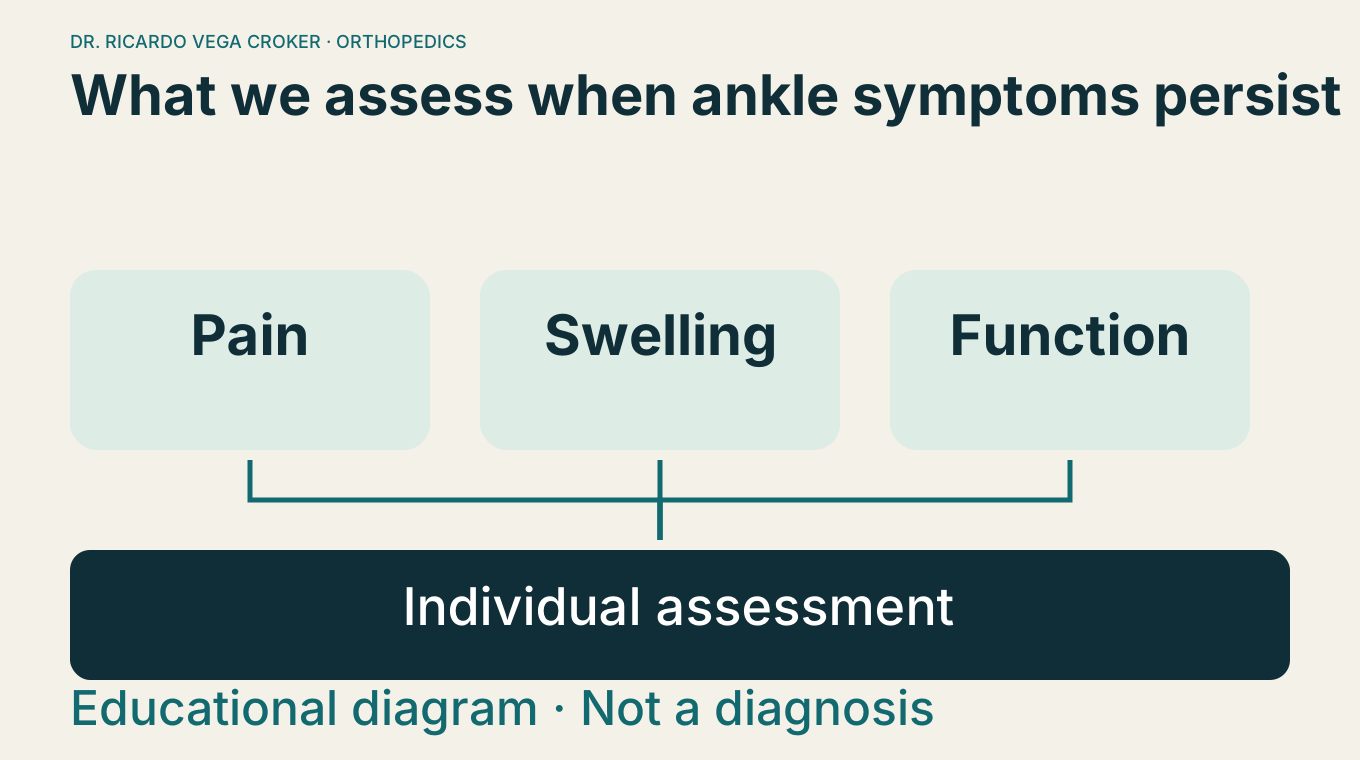
Rather than focusing only on the size of your ankle, prepare a description of what has changed: is there less pain, can you walk better, does the ankle feel unstable, and which activities bring the discomfort back? Note whether the swelling is decreasing, staying the same or getting worse.
Recovery varies with the injury. HSS recommends assessment if moderate or severe pain, swelling or bruising persists after three to five days of initial care; intense symptoms deserve assessment sooner. That interval is not an instruction to wait if you are getting worse. HSS: when to seek care after a sprain.
What is assessed at an appointment?
Assessment combines how the injury happened with an examination of your foot and ankle. The location of pain, movement, stability and ability to bear weight are reviewed. Depending on the findings, a fracture or another associated injury may need to be ruled out.
An MRI is not a requirement for every sprain. X-rays and other tests are requested when the history and examination provide a reason to use them. Mayo Clinic: examination and imaging.
If discomfort continues, incomplete recovery, tendon problems or other structures may be involved. A list of possibilities cannot identify your cause remotely. HSS: causes of persistent ankle pain.
How to prepare for the review
Bring the advice you received and any previous reports or images. Prepare a short note about when you twisted the ankle, activities you find difficult and questions you want answered. Writing down what you hope to regain —walking to work, climbing stairs or training— helps explain your priorities. You might ask: “What can we do now?”, “Which change should prompt another review?” and “How should I adjust work or sport?”. You do not need to post photographs or clinical details on social media to organise those questions.
Three common questions
Does swelling alone tell me how badly I injured my ankle? It cannot complete the diagnosis: it needs to be considered alongside symptoms and examination. Mayo Clinic: individual assessment.
Will I always need a boot or splint? Treatment depends on the assessment; some injuries need specific support or rehabilitation. Mayo Clinic: assessment and individual treatment.
When can I train again? Ask for a progression adapted to your injury. Restoring strength and balance is part of rehabilitation; returning too soon can contribute to further problems. Mayo Clinic: recovery and prevention.
Save these questions for your review. If your ankle remains swollen or gets worse, contact a healthcare professional to assess its progress.